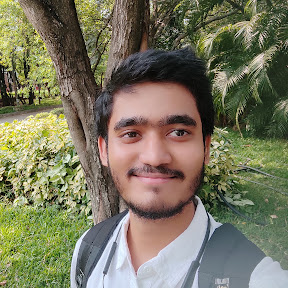
Welcome to my academic portfolio. I am Subhransu Dey, a passionate researcher in the field of quantum information theory. Originally from Kolkata, I have embarked on an exciting journey through the fascinating world of quantum physics from my undergraduate studies to my current pursuit of a PhD at the prestigious IIT Jodhpur.
PhD Scholar & JRF at Indian Institute of Technology (IIT) Jodhpur
Specializing in Quantum Information Theory and Quantum Computing
Selected as Junior Research Fellow (JRF) Scholar
Indian Institute of Technology (IIT) Jodhpur
Junior Research Fellow (JRF) Scholar
Specialization: Quantum Information Theory
S.N. Bose National Centre for Basic Sciences
University of Calcutta
Percentage: 77.4%
Focus: Quantum Information Theory
Serampore College
University of Calcutta
CGPA: 8.16
Belur High School
Percentage: 87.8%
Science Stream with Physics, Chemistry, Mathematics and statistics
Patha Bhavan Dankuni
Percentage: 84.85%
Strong foundation in Mathematics and Science
My research is driven by the quest to understand and harness the unique properties of quantum systems for practical applications. I believe in bridging theoretical foundations with computational implementations to advance our understanding of quantum phenomena and develop practical quantum technologies that can benefit society.
Duration: May 2024 - July 2024
Supervisor: Prof. Archan S Majumdar
Institution: S.N. Bose National Centre for Basic Sciences
Description: Comprehensive study of quantum information theory fundamentals, including quantum channels, quantum entanglement, and information transmission protocols. The project concluded with an in-depth analysis of quantum channels and their role in quantum information processing.
Key Learning: Quantum Information transmission protocols, Quantum entanglement measures
Duration: August 2024 - December 2024
Supervisor: Prof. Archan S Majumdar
Institution: S.N. Bose National Centre for Basic Sciences
Description: Advanced study of quantum error correction techniques, including stabilizer codes, surface codes, and error syndrome detection methods. Focused on understanding how quantum information can be protected from decoherence and operational errors.
Key Learning: Stabilizer formalism, Error correction codes
Duration: Recent Project
Supervisor: Dr. Bhasker Mukherjee
Co-supervisor: Dr. Shanku Paul
Description: Investigation of computational methods for efficient simulation of stabilizer quantum circuits. This project involved developing algorithms and computational techniques to simulate large-scale stabilizer circuits that are crucial for quantum error correction and fault-tolerant quantum computing.
Key Learning: Stabilizer circuit simulation, Computational quantum physics, Algorithm optimization
Graduate Aptitude Test in Engineering
Conducted by IISc & IITs
Council of Scientific & Industrial Research
National Eligibility Test (June 2024)
Qualified for JRF and Assistant Professorship
Joint Entrance Screening Test
For admission to PhD & Integrated PhD programs in leading research institutes
Joint Admission Test for M.Sc.
Physics Subject
For admission to IITs and NITs
Indian Association for Cultivation of Science
Master's Program Selection Test
Outstanding performance in entrance examination
As a PhD scholar who has recently begun the doctoral journey at IIT Jodhpur, I am currently working on several research projects that will lead to publications in peer-reviewed journals. My master's thesis work and ongoing research projects form the foundation for upcoming publications in quantum information theory and quantum error correction.
My research work during master's studies has resulted in comprehensive project reports and presentations that contribute to the understanding of quantum information theory. I am committed to publishing high-quality research that advances the field of quantum computing and information theory.
I am always open to discussing research opportunities, collaborations, and academic exchanges in the field of quantum information theory and quantum computing. Feel free to reach out if you share similar research interests or would like to discuss potential collaborations.